SOURCE ARCHIVE
EXTRACTED CONTENT
3,809 charsEnd-to-end RTL/ISS co-simulation flow
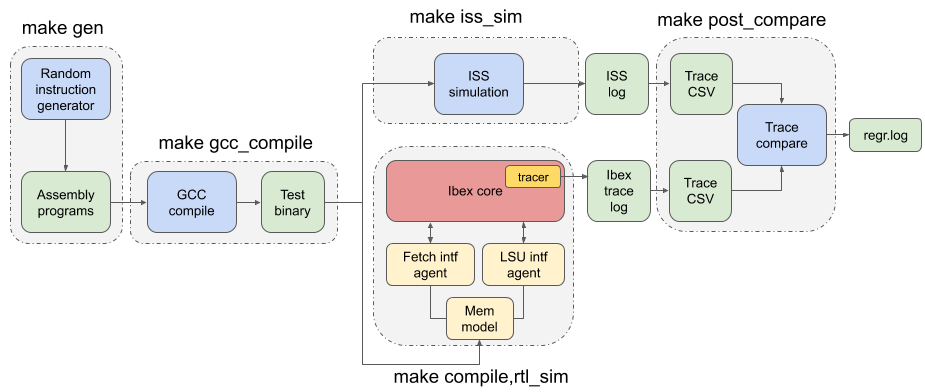
Figure 11 RTL/ISS co-simulation flow chart
The last stage in this flow handles log comparisons to determine correctness of a given simulation. To do this, both the trace log produced by the core and the trace log produced by the chosen golden model ISS are parsed to collect information about all register writebacks that occur. These two sets of register writeback data are then compared to verify that the core is writing the correct data to the correct registers in the correct order.
However, this checking model quickly falls apart once situations involving external stimulus (such
as interrupts and debug requests) start being tested, as while ISS models can simulate traps due to
exceptions, they cannot model traps due to external stimulus.
In order to provide support for these sorts of scenarios to verify if the core has entered the
proper interrupt handler, entered Debug Mode properly, updated any CSRs correctly, and so on, the
handshaking mechanism provided by the RISCV-DV instruction generator is heavily used, which
effectively allows the core to send status information to the testbench during program execution for
any analysis that is required to increase verification effectiveness.
This mechanism is explained in detail at https://github.com/google/riscv-dv/blob/master/docs/source/handshake.rst.
As a sidenote, the signature address that this testbench uses for the handshaking is 0x8ffffffc.
Additionally, as is mentioned in the RISCV-DV documentation of this handshake, a small set of API
tasks are provided in dv/uvm/core_ibex/tests/core_ibex_base_test.sv to enable easy
and efficient integration and usage of this mechanism in this test environment.
To see how this handshake is used during real simulations, look in
dv/uvm/core_ibex/tests/core_ibex_test_lib.sv.
As can be seen, this mechanism is extensively used to provide runtime verification for situations involving external debug
requests, interrupt assertions, and memory faults.
To add another layer of correctness checking to the checking already provided by the handshake
mechanism, a modified version of the trace log comparison is used, as comparing every register write
performed during the entire simulation will lead to an incorrect result since the ISS trace log will
not contain any execution information in the debug ROM or in any interrupt handler code.
As a result, only the final values contained in every register at the end of the test are compared
against each other, since any code executed in the debug ROM and trap handlers should not corrupt
register state in the rest of the program.
The entirety of this flow is controlled by the Makefile found at dv/uvm/core_ibex/Makefile; here is a list of frequently used commands:
cd dv/uvm/core_ibex

# Run a full regression
make

# Run a full regression, redirect the output directory
make OUT=xxx

# Run a single test
make TEST=riscv_machine_mode_rand_test ITERATIONS=1

# Run a test with a specific seed, dump waveform
make TEST=riscv_machine_mode_rand_test ITERATIONS=1 SEED=123 WAVES=1

# Verbose logging
make ... VERBOSE=1

# Run multiple tests in parallel through LSF
make ... LSF_CMD="bsub -Is"

# Get command reference of the simulation script
python3 sim.py --help

# Generate the assembly tests only
make gen

# Compile and run RTL simulation
make TEST=xxx compile,rtl_sim

# Run a full regression with coverage
make COV=1